Where heritage is the curriculum, not the decoration
We don’t just facilitate technological learning, we teach your children how to use it to solve real-world problems while staying deeply connected to their roots. Our spaces are safe, nurturing and intellectually stimulating.
WHAT YOUR CHILD WILL EXPERIENCE
Best of both worlds
We blend Indigenous Knowledge Systems with essential 21st-century skills – Artificial Intelligence, coding and robotics.
Cultural pride
Lessons are grounded in local heritage, so learners build confidence in their identity while mastering modern tools.
Hands-on innovation
Rather than just consuming technology, children learn to create it applying technical skills to community-centered projects
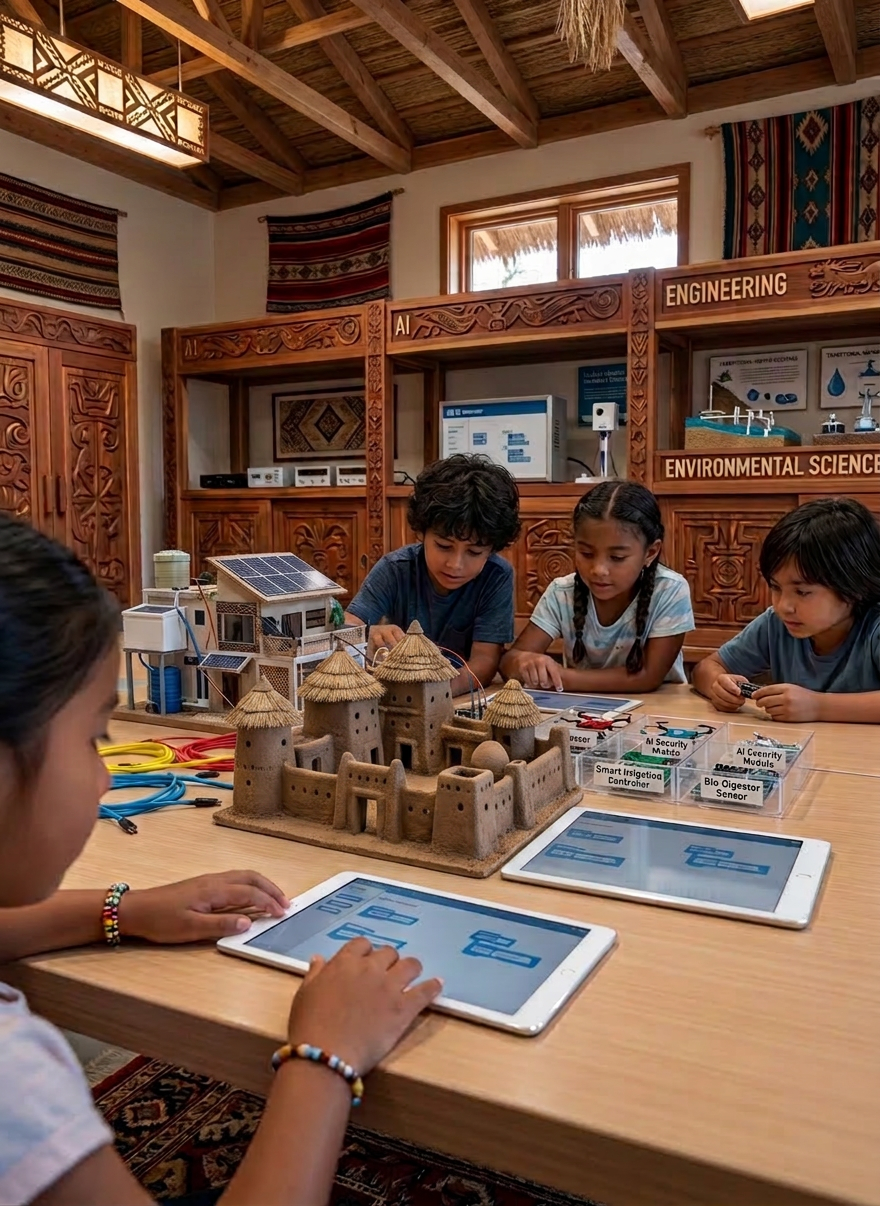
Formal Afterschool Programme
For ages 7-18. Based in Johannesburg, Sandton with plans to expand to other provinces.
Most after-school programmes ask: how do we add an extra skill to a child’s day? We ask a different question: what is the foundation that skill should sit on?
Our answer is Indigenous Knowledge Systems. Not taught as a culture class, but woven directly into how children learn robotics, artificial intelligence, and sustainability. A child in our programme might explore the cooling logic of a traditional clay homestead using CAD modelling, or learn the ecological reasoning behind an indigenous living fence before applying that same systems-thinking to a coding challenge. Heritage and technology aren’t separated into different lessons they explain each other.
What your child experiences
- A growing archive of elder oral histories, digitised and preserved as part of your child’s own learning journey
- A CAPS-aligned curriculum, co-developed with elders and reviewed by academic specialists, built around six foundational modules
- Real elders as teachers – community knowledge holders engaged as paid co-facilitators, not occasional guest speakers
- Hands-on STEM, including robotics and AI tools, taught through an Afrocentric lens rather than a borrowed one
- The Imbeleko Kiddies Corner; our digital platform with animated indigenous storytelling, elder interview recordings, gamified ecological learning, and AI-assisted indigenous language tools
Our intention for every child:
That they leave knowing they don’t have to choose between being rooted and being ready for the future. Both are already theirs.
Cultural Immersion Experiences
At the heart of our mission is a reimagining of cultural immersion—moving beyond static heritage to create family-inclusive learning journeys where Indigenous Knowledge is practiced, felt, and passed down.
We believe that heritage is not a relic to be observed, but an active, intergenerational inheritance. By weaving Indigenous Knowledge Systems directly into the fabric of modern education, we provide children and families with a space to experience culture as a lived reality.
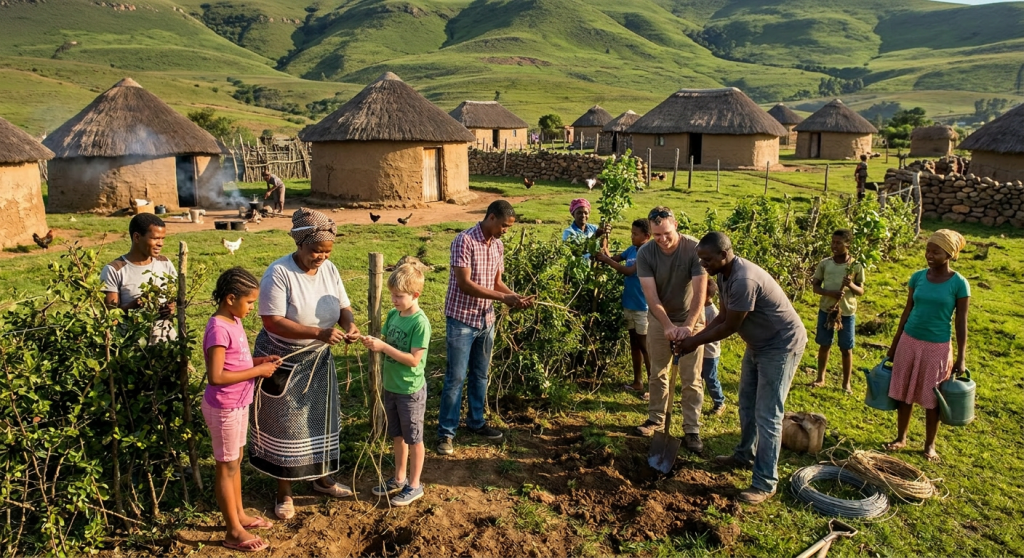
Experience Heritage in Practice:
Afrocentric STEM: We teach robotics, AI, and sustainability through an authentic, Afrocentric lens. By grounding technical skills in local ecological and historical context, we ensure that as children master the tools of the future, they remain firmly rooted in the wisdom of their ancestors.
Engagement with Knowledge Holders: Our programmes go beyond the classroom. Children engage directly with elders, local artisans, and environmental custodians—individuals who are not merely guest speakers, but active co-facilitators of the learning process.
The Intersection of Past and Future: We dissolve the barrier between heritage and technology. Whether through exploring the cooling logic of traditional clay homesteads via CAD modelling or applying the systems-thinking of indigenous living fences to modern coding challenges, our learners see how ancient wisdom explains—and elevates—modern innovation.
Family-Inclusive Journeys: Our digital platform, the Imbeleko Kiddies Corner, brings this immersion home. With animated storytelling, digitized oral histories, and AI-assisted language tools, the learning journey becomes a shared experience for the whole family, ensuring that the preservation of culture remains a collaborative, household practice.
Holiday Intensives
Our Holiday Intensives are designed to turn school breaks into transformative windows of discovery. By condensing our core methodology into a focused, joyful format, we provide children with an immersive introduction to the powerful intersection of foundational technology and Indigenous Knowledge.
Building on the remarkable success of our recent winter pilot, these programmes are crafted to spark curiosity, build unwavering confidence, and foster creative problem-solving in a high-energy, supportive environment.
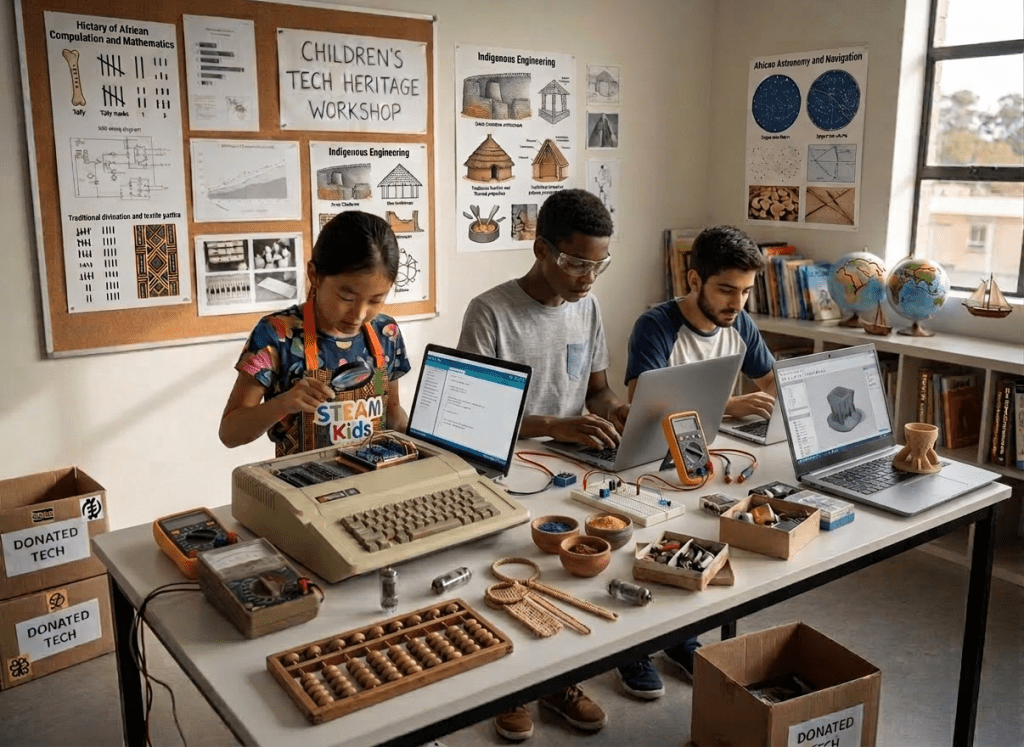
What Happens During the Intensives?
– Fast-Tracked Learning: Over a few short, intensive days, students dive into the core of our curriculum, exploring how modern tech like robotics, AI, and digital modelling is deeply informed by ancient systems-thinking.
Joy-Centered Exploration: We believe deep learning happens best when curiosity is ignited. Our intensives are designed to be vibrant and play-based, removing the pressure of traditional testing while maximizing engagement and “aha!” moments.
The “Roots and Future” Approach: Students are introduced to the same foundational modules as our long-term learners, but in a compressed, high-impact format. Whether it is coding a solution inspired by indigenous ecological patterns or engaging in oral history workshops with community elders, every activity is designed to make complex concepts accessible and exciting.
Confidence Through Creation: Each intensive culminates in a hands-on project. Children leave not just with new technical skills, but with the pride of having built something that connects their ancestral heritage to their digital future.
Who is this for? Perfect for curious minds ages 7–18 who are ready to explore how their heritage can serve as a superpower in a tech-driven world. Whether your child is a budding coder, a storyteller, or a tinkerer, these intensives provide a unique space to grow, connect, and innovate.
DIGITAL
Kiddies Corner
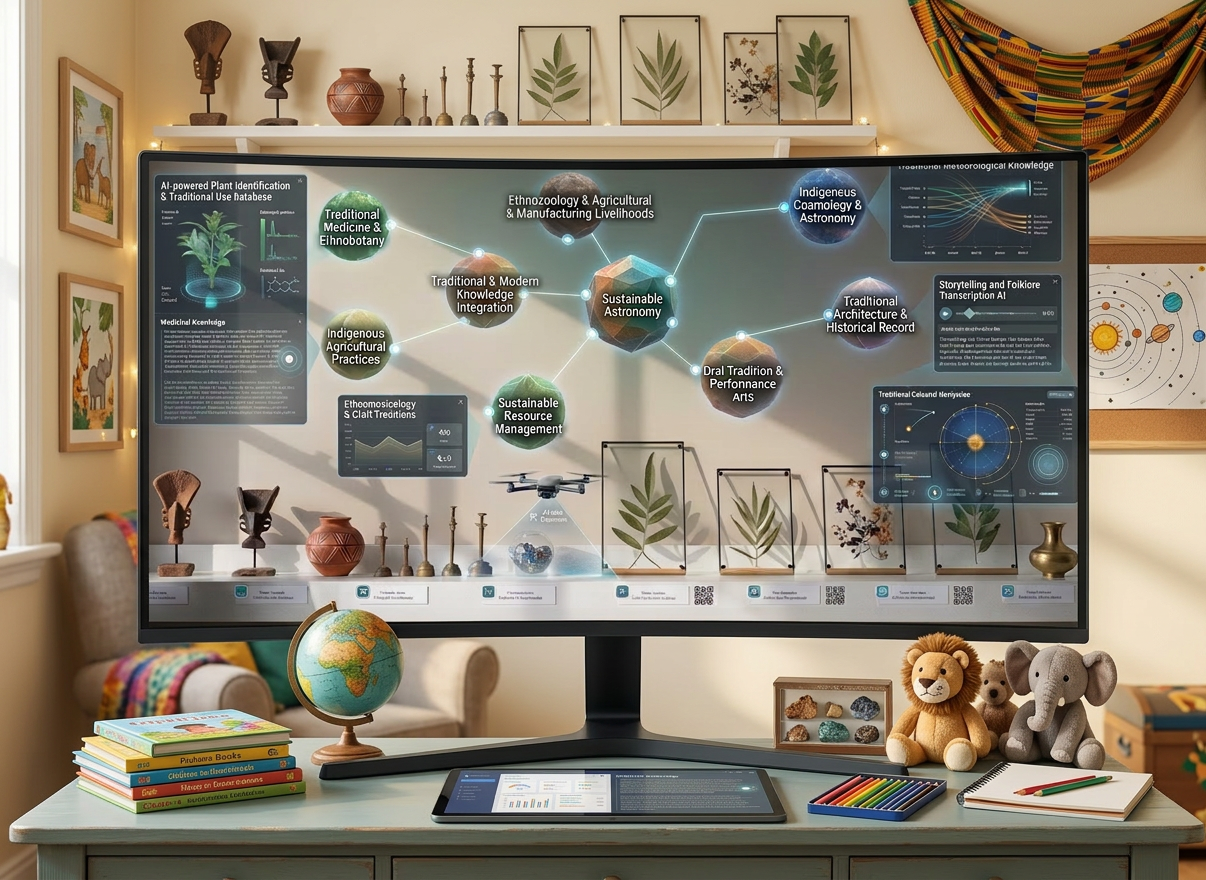
An interactive digital platform offering age-appropriate indigenous stories, games, AI-assisted learning tools and multilingual content – extending Imbeleko’s reach to learners across the country and the diaspora.
Guided by elders, educators and youth voices
Strategic, cultural and youth voices shape every curriculum decision.
Board of Directors
Multidisciplinary fiduciary oversight – educators, IKS practitioners, technologists, ESG and legal experts.
Advisory Council of Elders
Knowledge Keepers ensuring ethical, accurate integration of IKS into curriculum and immersion.
Youth Innovation Panel
Learners and alumni co-designing digital tools, curriculum modules and innovation projects.
Ready to enrol your child?
Register your interest for the January 2027 cohort, or get
in touch about upcoming holiday intakes.

